Accrued Expenses Vs Accounts Payable Sage Recommendation Us

Cflow is a no-code workflow automation platform designed to simplify complex finance processes like accrual tracking, buy approvals, invoice administration, and month-end reconciliation. With Cflow, finance groups acquire higher management over unbilled liabilities and may automate the full lifecycle of accruals with accuracy and ease. Utilizing a no-code automation platform like Cflow permits finance teams to construct customized workflows for accrual approvals, documentation uploads, and review cycles. These instruments ensure that https://www.online-accounting.net/ accruals observe a structured path, scale back manual touchpoints, and support faster, extra correct financial shut processes.

Accrued Expenses Vs Accounts Payable: Key Variations

In accruals basis accounting, you must reconcile credit and debit info for accounts receivable (revenue) and accounts payable (expenses) at the end of the accounting interval. Finance’s accounting methodology may influence the accuracy and stability of your monetary reporting. For instance, since it’s straightforward, many small companies and startups run financials utilizing the money foundation of accounting.

accounts payable accrual

For the previous 52 years, Harold Averkamp (CPA, MBA) hasworked as an accounting supervisor, supervisor, advisor, college teacher, and innovator in educating accounting online. For the past 52 years, Harold Averkamp (CPA, MBA) has worked as an accounting supervisor, manager, advisor, college instructor, and innovator in instructing accounting on-line.

accounts payable accrual

Typically, when evaluating the 2, an entry to AP shows that a cash outlay is just across the corner, while an entry to accrued expense signifies that a cash outlay is on the horizon. When it involves accrued expenses, that fee might be due quickly, or it might come due in months. You have a contract along with your HVAC supplier that requires them to supply upkeep companies throughout the year. Underneath the accrual methodology of accounting, you document 1/12 of the contract to accrued expense each month, showing that you’ve used 1/12 of that service contract. These liabilities also have an effect on the income statement by influencing expense recognition.

  • On the opposite hand, accounts payable is the amounts owed by a company to its suppliers for items or providers which were acquired, but not yet paid for.
  • Understanding accrued salaries expense us and vendor payables is about seeing their real-world impact on companies.
  • Accounts payable is a liability to a creditor that denotes when a company owes cash for goods or services and is a kind of accrual.
  • Year-end AP accruals are similar to different year-end accruals that a business may need to process.
  • Accrued bills and accounts payable each characterize funds that an organization owes to a 3rd party.

Keep In Mind, if employee wages usually are not accrued, monetary assertion totals for the month shall be understated, since they won’t replicate the precise value of payroll for June. They can present a complete view of your monetary position, with accurate, real-time knowledge and easy-to-use dashboards. Say your business accrues a major quantity of wages or taxes but doesn’t have the cash flow to pay them when they come due. For example, suppose your corporation orders raw supplies from a provider, who issues an invoice with payment phrases of 30 days. Or they might be items and services that you’ve received but not but been invoiced for by the provider. These expenses are often linked to ongoing prices your corporation needs to account for persistently, corresponding to salaries, taxes, and interest on enterprise loans.

Claims Administration Software Program: Streamlining Claims Processing For Modern Businesses

On the other hand, following accounts payable best practices helps companies pay their debts with out losing liquidity. Each are essential for keeping a company’s funds stable and are key elements of accrual accounting. Accrued expenses and accounts payable are recorded as liabilities on a company’s steadiness sheet, but they differ in terms of timing, recognition, and financial influence. Understanding these variations is crucial for correct financial reporting and effective money circulate administration.

accounts payable accrual

Another method to prevent fraudulent exercise is to segregate reconciliation duties in your group. Totally Different staff ought to evaluation accrued expenses, regulate entries, reconcile orders, and confirm vendor information. An accounts payable audit program improves accuracy and dissuades bad actors from perpetrating fraud. In most instances, whereas accounts payable accruals can be thought-about accrued bills, an accrued expense just isn’t all the time thought of accounts payable. By the tip of this guide, you should have accounts payable accrual a clear understanding of accounts payable versus accrued bills and their position in monetary administration.

Accounts Payable is a liability account during which suppliers’ or vendors’ permitted invoices are recorded. As a result, the stability in Accounts Payable ought to be a precise amount. Accruals and accounts payable are two essential aspects of economic accounting, nonetheless, they both paint a unique picture of a company’s financial place.

When Ought To An Organization Document Accrued Expenses?

For instance, if an organization incurs $10,000 in accrued utilities for the month, the journal entry would debit the utilities expense account and credit score accrued liabilities. This process ensures bills are matched to the proper interval, maintaining accurate financial data and fostering trust amongst stakeholders. Understanding the distinction between accrued expenses and accounts payable (AP) is vital to getting your financial reporting, budgeting, and cash move proper. While each fall underneath short-term liabilities, they’re dealt with in a special way and show up at totally different instances. For AP teams, recognizing how they differ is critical to closing the books accurately and staying audit-ready.

Many accruals rely on input from business items outside the finance department. Encourage regular communication with division heads to determine incurred expenses, similar to unbilled consulting providers, marketing activities, or upkeep work. These individuals are sometimes closer to the precise transactions and may present the most correct estimates of unrecorded liabilities.

Regular evaluations assist refine estimation accuracy over time and supply insight into vendor billing patterns. They additionally serve as an inside control to ensure that reversals are processed accurately and liabilities aren’t overstated. In its simplest kind, accounting is the method of recording the money an organization makes and spends.


Accounting For Real Estate in UAE Creative Zone Tax & Accounting

real estate accounting entries

This term refers to all the outstanding debt that the company owes. If the numbers don’t match, then there has been an accounting error. Granted, there could still be an error even if the equation is balanced (for instance, if two separate errors offset one another). But the accounting equation is a good way to detect glaring errors. Can you get in trouble for erroneous or misleading accounting practices? But real estate accounting entries intentionally manipulating financial information is considered a white collar crime and may warrant prosecution.

Managing properties as long-term business assets

Financial planning goes beyond just securing funds; it’s about ensuring the sustainable growth of the real estate business. Developers must craft financial strategies that balance immediate project needs with long-term business goals. Development accounting plays a critical role here, offering insights into cash flows, profitability, and projected expenses. By analyzing these metrics, developers can make informed decisions about scaling operations, reinvesting profits, or entering new markets.

Gaining Insights from Financial Analysis

The property account includes the land and buildings owned by the business. The plant account includes the machinery and equipment used in production. The equipment account includes the vehicles, computers, and office furniture used by the company. All of these assets have a useful life of more than one year and are typically financed with long-term debt or equity.

  • It also allows them to assess the return on their investments more accurately.
  • Accurate allocation drives business success and ensures that resources support property management objectives.
  • The equipment account includes the vehicles, computers, and office furniture used by the company.
  • Investing in real estate can be highly rewarding, but it’s not without its complexities.

Financial Planning for Real Estate Developers

Properties should be valued accurately for transparent financial reporting. Inaccurate asset valuation can distort balance sheets and mislead stakeholders. For real estate professionals, accurate asset valuation is crucial. Accurate asset valuation drives financial transparency and stakeholder trust. Ultimately, accurate asset valuation ensures that financial statements reflect the true financial position of a property. Real estate development accounting forms the financial backbone of the real estate industry.

Create the Property Fixed Asset and Loan Account

real estate accounting entries

When the customer makes a payment, the company needs to record cash received and reverse receivable as normal. Lastly, don’t overlook smaller entries such as income from vending machines, laundry facilities, or other auxiliary income sources. Similarly, record deductions like legal fees or HOA dues to maintain a complete financial picture. BDMP Assurance, LLP is a licensed CPA firm https://hcd.saladillo.gob.ar/quickbooks-proadvisor-program-for-accountants-4/ that provides attest services, and Berry, Dunn, McNeil & Parker, LLC, and its subsidiary entities provide tax and advisory services.

Asset Management

Training sessions ledger account offer insights into the nuances of balance sheets and income statements. For real estate professionals, understanding these statements is crucial for business optimization and growth. Apart from GAAP and IFRS, there are industry-specific accounting guidelines. These guidelines cater to the unique aspects of real estate accounting. Understanding these nuances ensures accurate financial reporting tailored to the real estate sector.

real estate accounting entries

The real estate development firm’s success is often tied to how well they manage and control these pivotal costs. Successful real estate accounting requires continuous professional development to ensure effective practices in managing financial transactions. Professionals must stay updated on changes in tax laws, accounting standards, and regional property markets.

real estate accounting entries

What Is A Balance Sheet For A Law Firm?

real estate accounting entries

It involves regular reconciliations, audits, and professional development. These activities ensure that financial data is accurate, relevant, and aligned with industry standards. Accurate financial data is the cornerstone of a successful real estate business. It guides investment decisions, operational strategies, and stakeholder perceptions. Ensuring this accuracy is a continuous process, involving regular reviews, audits, and training sessions. Recognizing these correctly is crucial for accurate financial reporting.

Adapting to Evolving Industry Standards

Accountants may be trained in audit defense, and they’ll know how to properly handle dealings with the IRS, and get gathered any financial materials that are requested of you. Assets—like a building—wear down over time, which may cause a natural loss in value. When you’re filing taxes, you can note depreciation of a property to protect your income.

FTA penalties and bookkeeping errors can cost businesses thousands of dirhams. Due to this, tax agencies with approved tax filing services, such as ours in UAE, are responsible for providing accurate VAT filing services. There has been a tremendous evolution in the real estate sector over the last few decades. There are a lot of transactions involved, as well as compliance with a lot of federal regulations. All of this being said, one important aspect of the industry that must be kept in mind at all times is accounting, which is a very integral and essential part of the process.

Understanding Tax-Deductible Business Expenses in Singapore Welcome to Counto Singapore

deductible business expenses

Technically speaking, there are no limits on the tax deductions you can claim for your business. Assuming your business expenses are ordinary, reasonable, and necessary for your business, you can deduct almost any amount, with certain restrictions depending on your expenses, location, and business structure. There are many business expenses that you can deduct 100% of from your taxable income, including travel expenses, office supplies, and marketing expenses. Keep track of your business expenses, and keep documentation, such as receipts and records of purchases.

How to Choose a Business Registration Service in Singapore (A 7-Point Checklist)

If you are married and file a joint return, you and your spouse are treated as one taxpayer in determining any reduction to the dollar limit, regardless of which of you purchased the property or placed it in service. Generally, sales taxes on your car are part of your car’s basis and are recovered through depreciation, discussed later. The following examples illustrate the rules for when you can and can’t use the standard mileage rate for five or more cars. You can elect to use the standard mileage rate if you used a car for hire (such as a taxi) unless the standard mileage rate is otherwise not allowed, as discussed above. For more information about depreciation included in the standard mileage rate, see Exception under Methods of depreciation, later. If you want to use the standard mileage rate for a car you lease, you must use it for the entire lease period.

deductible business expenses

What Is an Accountant and What Do They Do?

These expenses should be specifically stated in your records to ensure proper allocation of your deductible business expenses. Generally, the Modified Accelerated Cost Recovery System (MACRS) is the only depreciation method that can be used by car owners to depreciate any car placed in service after 1986. For additional information on the depreciation limits, please refer to Topic no. 704. Publication 463 explains the depreciation limits and discusses special rules applicable to leased cars.

Startup costs

  • So if your office doubles as a guest room for your mom when she’s in town, that won’t fly.
  • Intuit accepts no responsibility for the accuracy, legality, or content on these sites.
  • You’ll need an IRS Online Account (OLA) to complete mobile-friendly forms that require signatures.
  • Okay, no matter what kind of business you run, you probably have to stock up on traditional office supplies—whether it’s printer ink, pens or Post-it notes.
  • You could also establish the date of each trip with a receipt, record of delivery, or other documentary evidence.

For 2025, you will use your unadjusted basis of $1,560 to figure your depreciation deduction. If you dispose of the car before the last year of the recovery period, you are generally allowed a half-year of depreciation in the year of disposition. This rule applies unless the mid-quarter convention applies to the vehicle being disposed of.

  • For depreciation purposes, a car is any four-wheeled vehicle (including a truck or van) made primarily for use on public streets, roads, and highways.
  • This section briefly describes how employees complete Forms 2106.
  • You and your employees use your four pickup trucks in your landscaping business.
  • Publication 463 explains the depreciation limits and discusses special rules applicable to leased cars.

In this case, you figure the percentage of business use for the year as follows. See Qualified business use 50% or less in a later year under Car Used 50% or Less for Business, later. For purposes of figuring depreciation, if you first start using the car only for personal use and later convert it to business use, you place the car in service on the date of conversion. If the cost of your section 179 property placed in service in tax years beginning in 2024 is over $3,050,000, you must reduce the $1,220,000 dollar limit (but not below zero) by the amount of cost over $3,050,000.

Years 1 and 6 apply the half-year or mid-quarter convention to the computation for you. If you dispose of the vehicle in years 2 through 5 and the half-year convention applies, then the full year’s depreciation amount must be divided by 2. If the mid-quarter convention applies, multiply the full year’s depreciation by the percentage from the following table for the quarter that you disposed of the car. For each year of the lease that you deduct lease payments, you must reduce your deduction by the inclusion amount figured for that year. These records must show how you acquired the property, the person you acquired it from, and when you placed it in service.. For more information on the above section 179 deduction limits, see Pub.

You are an outside salesperson with a sales territory covering several states. Your employer’s main office is in Newark, but you don’t conduct any business there. Your work assignments are temporary, and you have no way of knowing where your future assignments will be located. You stay there for one or two weekends a year, but you do no work in the area. You don’t satisfy factor (1) because you didn’t work in Boston. You satisfy factor (2) because you had duplicate living expenses.

You can get a transcript, review your most recently filed tax return, and get your adjusted gross income. Anyone paid to prepare tax returns for others should have a thorough understanding of tax matters. For more information on how to choose a tax preparer, go to Tips for Choosing a Tax Preparer on IRS.gov..

deductible business expenses

A rent payment is any amount you pay to use the property for your small business that you don’t own. If you use the vehicle for both business and personal purposes, you must split the costs based on mileage. Vehicles used as equipment—such as dump trucks—and vehicles used for hire, like taxis and airport shuttle vans, do not qualify. When you’re a small business owner, tax tasks can feel overwhelming, especially figuring out which of your expenses are tax-deductible. Taking time away from the day-to-day management of your business to investigate every possible tax tip isn’t realistic.

This includes expenses for depreciation and operating costs such as rent, utilities, maintenance, and protection. For example, you must allocate your expenses if a hotel includes entertainment in its lounge on the same bill with your room charge. You can no longer take a deduction for any expense related to activities generally considered entertainment, amusement, or recreation.

For 2023, the simplified method offers $5/square foot, up to a total of 300 square feet. If you have a small business loan and/or small business credit card you used to finance business expenses over time, you will probably be able to deduct the interest your business pays. Fees may be deductible as well, including business bank account fees. Most very small and small businesses are considered pass through entities.

Their employer reimburses them $280 deductible business expenses a day ($560 total) for living expenses. Their living expenses in Denver aren’t more than $280 a day. This is an allowance your employer may use to reimburse your car expenses.

Why contractors make more money than employees

do contractors earn more than full-time employees dice com career advice

In the past, it’s been a simple question of which type of employee is a better fit for the task. The health insurance deduction has some restrictions when it comes to spousal coverage. The IRS has specific guidelines in Publication 535 that cover all the scenarios. Everyone is talking about deductions, but there’s another HUGE advantage of being a contractor – retirement accounts!

You felt like you left money on the table when you changed jobs in the past. You never have to feel that way again.

do contractors earn more than full-time employees dice com career advice

You can maintain a low overhead by only providing workstations, benefits, and job security to key employees. You can attract young, mobile talent by offering temporary (and even off-site) employment opportunities. Full-time workers trade off less flexibility for greater job security (though employers can provide certain perks like 9-80 scheduling). Freelancers and contractors typically show the same dedication to quality of work as employees. Full-time jobs come with an agreed-upon wage, typically expressed as an annual salary, while contractors are paid an hourly wage.

Plus, your health insurance will most likely be less subsidized by the employing company rather than your client company. You’ll often pay more for a less featured plan than your client company. In today’s workforce, both full-time employment and contracting offer unique advantages and challenges. Full-time roles provide stability, structured growth, and comprehensive benefits, making them ideal for those seeking a steady income and a clear career path within an organization. In short, contractors offer flexibility and can be cost-effective for short-term projects.

I don’t have to scrape the bottom of the barrel jobs just to make ends meet. As a professional consultant, I have to keep in mind the change in clients and type of work I would get (different, smaller, lower level) if I ever decided to hang my own shingle. Sometimes people can underestimate the value of organizational affiliation. I have worked as a contractor for more than 10 years until recently where I have accepted a full time position, with all kinds of VERY interesting benefits.

The differences between these types of employees typically lie in the additional benefits employers provide. Contractors can only work 1,040 hours (roughly 4 months) for any one employer each year. If you find a freelancer indispensable to your operations, consider offering them full-time or contract-to-hire employment.

I’m worried I’ll miss deductions just because I don’t know they exist. I’ve heard mixed things about whether you can take it if you’re eligible for coverage through a spouse’s employer plan. Those are established companies but they still missed deductions for me. And the contractor can claim expenses for all of their work-related equipment, things like laptops, mobile phones, office equipment, broadband connections and so on. HMRC use the arguments above to support the IR35 legislation and claim that there are vast numbers of “deemed employees” that are clearly dodging tax. With this template, you can respond immediately and give yourself time to consider the offer.

As aforementioned, if there are new developments in your industry, software, digital, marketing, sales, etc. – your employer will let you know. Even when you’re ‘off,’ you could be emailed an important deadline to be fixed on that same day. Planning a day out with friends or family can be harder when your work/off times are not predetermined.

The Pros of Contract Employment

There’s no universal answer to which is better—contract employees and full-time employees each bring unique strengths to the table. To successfully integrate contractors into your workforce set clear expectations, leverage strategic immersion, set a main point of contact, and work with staffing partners. This approach minimizes risk while helping refine job requirements before committing to a full-time job. These roles don’t typically require the permanence of traditional employment. For clearly defined deliverables with a fixed period of time, using a contractor makes strategic sense. Contract roles allow businesses to experiment and evolve without risking compliance with complex employment laws.

I have qualifications and work experience in Engineering and Physics, writing, editing and line management experience, so I feel I have useful skills. As mentioned above by another scientist, maybe it would be in reviewing or analyzing other people’s scientific work. After building my website into sustainable income generating vehicles, I got a little bored and longed for more inter-human activity again. A 40 hour work week is totally arbitrary, and I still don’t understand how there can be people who only work 40 hours a week or less and complain why they can’t get ahead. The X Factor I did not anticipate about building a large personal finance blog is that other companies would be interested in hiring me for my online content knowledge and services. According to a survey conducted by independent research firm Edelman Berland and commissioned by the Freelancers Union, more than one in three workers – 53 million Americans – is now freelancing.

  • In today’s dynamic employment landscape, understanding the key differences between these two options is critical for any business owner aiming to make informed decisions.
  • Contractors offer the flexibility to scale your workforce up or down based on demand, enabling agile responses to changing business needs.
  • Contractors are responsible for securing their own benefits, like health insurance and retirement savings—which can be a considerable expense.

In many cases, the value of benefits can significantly enhance overall compensation beyond base salary alone. Misclassifying workers as independent contractors can land businesses in serious legal trouble. If you misclassify a worker, you could be on the hook for back wages, overtime pay, and payroll taxes. You might even have to provide benefits like health insurance and retirement plans. And that’s not all, folks—the Department of Labor can hit do contractors earn more than full-time employees dice com career advice you with hefty fines.

  • Unsure if hiring an employee is the right decision for your business?
  • With this template, you can respond immediately and give yourself time to consider the offer.
  • Full-time employees typically work a fixed schedule, often a traditional 9-to-5.
  • While picking and choosing jobs, you’re continually gaining experience.
  • Full-time employees are always focusing on the business as they have a schedule and can get more quality work done as they are not restricted to a short term contract.

If you feel you’re not getting paid what you’re worth and want to boost your income, start your own business online on the side! It used to cost a fortune and a lot of employees to start your business. Now you can start it for next to nothing with a hosting company like Bluehost for under $3/month and they’ll give you a free domain for a year to boot. The irony is that a rockstar contractor will probably never want to be locked down because s/he is making way more than a full-time employee, with a lot more freedom.

If you need work done over a long period of time, having a permanent staff member is definitely the most economic way to do it. Contractors generally aren’t covered under your company’s insurance, making you liable for any injury sustained on the job. Ensure you include necessary insurance requirements into the contract before they start to avoid this.

Balancing the benefits with the downsides of being an independent contractor

This is factored into the salary they pay you and assumes an average level of risk. As a contractor you can get exactly the same insurance for a small cost and also align the risk as you see fit. As a 1099 worker, you will have to buy your own health insurance, and that can be very expensive. You’ll also have to buy all of your own equipment like a computer, desk and office chair, and cell phone. And you won’t get a 401k match, and “paid vacation” doesn’t really exist for 1099 workers—if you don’t work, you don’t get paid. As an independent contractor, you operate similarly to a small business owner.

Both contractors and full-time employees have their own approaches to these variables, and we’ll break them down in this section. A full-time employee, on the other hand, is a person who works a specific number of hours per week for a particular employer. This arrangement involves a long-term commitment, and the employer-employee relationship is limited by employment laws and regulations. The bad – There are no employment protection rights for contractors and no holiday pay, no sick pay and no paid maternity or paternity leave.

Understand Miscellaneous Expenses and Properly Record them

miscellaneous expenses accounting

This includes impairment-related expenses necessary for work, such as costs for special equipment, attendant care, or other accommodations that allow the employee to complete their job tasks. Fee-basis officials must also use Form 2106 to report their expenses, and these deductions can be claimed directly as adjustments to income rather than as itemized deductions. Like reservists, performing artists use Form 2106 to report these expenses as adjustments to income, allowing them to deduct their expenses directly against income rather than as itemized deductions. Reservists who travel more than 100 miles away from home for duty can deduct travel-related expenses, including lodging, meals, mileage, parking fees, and tolls.

Effective Retail Cash Flow Management Strategies

miscellaneous expenses accounting

The deductible amount is subject to the federal per diem rate, which is the maximum allowable for meals, lodging, and incidental expenses. The IRS previously allowed certain miscellaneous deductions up to 2% of adjusted gross income (AGI). If a business has received benefits from an estate or trust that is closing, it may be eligible to deduct any remaining deductions the estate or trust couldn’t use. Businesses can deduct the amortized portion of the premium each year, which reduces the taxable interest reported on their tax return.

  • Businesses should track and write down all of their miscellaneous costs to reduce their financial burden and save as much money as possible on taxes.
  • These expenses might include travel, meals, tools, uniforms, or other items necessary for the job.
  • Properly tracking and categorizing miscellaneous expenses isn’t just good bookkeeping; it helps businesses stay financially organized, maximize deductions, and avoid compliance issues.
  • Schedule 1 (Form 1040) adjusts gross income and includes impairment-related work expenses for employees with disabilities and any repayments made under the claim-of-right rule.
  • For a business, this might include small, one-time outlays such as unexpected office repairs, minor software subscriptions, or small employee reimbursements for incidental purchases.

Pub 15 2019: Employer’s Tax Guide Explained

Building upon the concepts of debits and credits, expense accounts specifically track the costs incurred by a business in its operations. Examples of common expenses include rent, utilities, salaries, and advertising. Professional services, such as accounting and legal fees, can help businesses manage miscellaneous expenses and ensure miscellaneous expenses accounting compliance with accounting standards. Investing in accounting software for a small business is recommended to ensure your business is equipped with the right tools to manage your finances efficiently.

miscellaneous expenses accounting

Step-by-Step Guide to Starting Your Bookkeeping Business in 2025

A “miscellaneous expense” is a category used in accounting for small, infrequent, or minor operational costs that do not neatly fit into other specific expense accounts. These are typically unpredictable and often non-recurring costs, making them difficult to budget for individually. Examples of items often classified as miscellaneous expenses include small office supplies, minor repairs, bank service charges, or postage for non-routine items. Running a business comes with all kinds of costs, from payroll and rent to office supplies and software subscriptions. But what about miscellaneous expenses that https://www.bookstime.com/articles/ai-in-accounts-payable don’t fit neatly into any specific category?

You didn’t budget to conduct a search for a new replacement, but now you have expenses related to job postings, hiring an executive search firm, and referral bonuses. Many miscellaneous expenses are deductible, but they must be ordinary, necessary, and well-documented to qualify. Proper documentation of all business expenses, no matter how small, helps businesses stay compliant with tax regulations and avoid potential penalties. Proper bookkeeping ensures that even the smallest expenses are accounted for, providing a clear and accurate picture of where your money is going. They often have to pay credit card processing fees, currency exchange costs for international payments, overdraft fees and wire transfer charges. Keeping a close eye on them ensures accurate financial records, prevents unnoticed spending, and helps maintain overall financial stability.

  • It is useful to note that the company should not always record any expense that is small into the miscellaneous expenses account.
  • Importantly, it is an efficient way to manage expenses rather than handling things manually.
  • Keeping track of miscellaneous expenses makes it possible to identify areas where they can cut the budget if necessary.
  • Miscellaneous expenses cover business-related costs that don’t fall under major categories like rent, payroll, or inventory.
  • Similarly, negotiating with vendors for better rates or seeking alternative suppliers can lead to significant savings over time.
  • It’s even more important when a company doesn’t have much money or resources to work with.

With Pemo, you can track every payment, streamline approvals, and build more accurate reporting from the ground up. Pemo prompts https://hammamd.site/efficient-disbursement-management-in-modern/ employees to submit receipts through the app in real time, right after they swipe. When someone makes a purchase using their Pemo card, they’re prompted to upload a receipt, add a note, and tag the expense; so your ledger stays clean and your reports stay accurate. While they may seem harmless, miscellaneous spending can add up over time, especially when there’s no oversight or visibility into who spent what. The cost of printing materials for marketing, such as brochures and pamphlets, is included in the marketing expenses, so do not need to be shown here.

What Happens If You Don’t Track These?

miscellaneous expenses accounting

When it comes to managing finances, accurately recording and categorizing miscellaneous expenses is essential. At Alaan, we’ve built automated VAT compliance checks into our platform to ensure that every receipt meets VAT standards. Our system extracts and verifies details like VAT amounts and Tax Registration Numbers (TRN) for tax-deductible expenses, providing more accurate records during tax time.

Importance of Accurate Record-Keeping

These expenses are often unforeseen or irregular and do not usually fit budgetary allocation. Though they are insignificant individually, together, they can add up and impact an organisation’s budget over time. It also helps them make good decisions about using their resources and create detailed plans for their overall budgeting strategies. By accurately predicting their needs for miscellaneous expenses, companies can stay ahead of the curve when it comes to managing their finances and ensuring they stay on track.

Specifically Non-Deductible Costs

For transactions made with a credit or debit card, bank or credit card statements are also necessary records. Each document should clearly show the expense amount, payment date, vendor name, and a description of the item or service. Professional development and continuing education costs are another frequent miscellaneous expense. The fees for attending seminars, webinars, or industry conferences, as well as the cost of books and online courses that maintain or improve your skills in your current profession, are deductible.

Is Miscellaneous Expense a Debit or Credit?

  • Whether it’s for administrative tasks or creative endeavors, these supplies form the backbone of a well-equipped and functioning workplace.
  • Start implementing these strategies today to take control of your business expenses and improve your financial management practices.
  • In case items under miscellaneous expenses increase in usage and size, they should be given their own account.
  • Personnel expenses include both salaried/hourly employees (W2) and contractors /consultants (1099) categories, plus donated professional services.
  • Schedule A (Form 1040) is for itemized deductions, including some unreimbursed employee expenses and other deductible miscellaneous expenses.
  • Costs incurred for business travel, like lodging, meals, and airfare, often fall into a defined expense category and directly support the business’s operations.

This increases the balance of the miscellaneous expense account, reflecting the cost incurred by the business. The corresponding credit entry typically goes to a cash account if the expense is paid immediately, or to an accounts payable account if the expense is incurred but not yet paid. Sundry expenses, also known as miscellaneous expenses, are the expenses incurred by the company during the accounting period under consideration. Many miscellaneous expenses qualify for tax deductions, reducing taxable income and providing direct savings. However, businesses need to document these deductions accurately to claim them.

6 AI Tools for Invoice Processing Save Time & Cut Costs

machine learning invoice processing

Whether processing hundreds or thousands of invoices per month, AI adapts to business needs, making it a future-proof solution for organizations looking to expand. Inefficiencies extend into approval workflows, where manual processes contribute to slower cycles, impacting payment timelines and vendor relationships. The traditional dependency on paper-based systems adds another layer of complexity, reducing accessibility and impeding the transition to more streamlined digital formats. This gradual shift is met with resistance and poses challenges in implementation. Imagine a scenario where the painstaking task of sorting through stacks of invoices and manually entering data becomes a relic of the past. This is the promise that https://erismizar.com/bitcounts-cryptocurrency-tax-accounting-experts/ AI holds in invoice data capture – a promise not just to streamline processes but to revolutionize the core of how businesses manage their financial transactions.

  • Previously, AP teams had to manually input this data into ERP systems—a tedious and error-prone task prone to misallocated figures and formatting inconsistencies.
  • Human errors, like duplicate entries, missing invoices, or bad data, are common in AP and costly.
  • Over time, AI learns from past mistakes, refining its ability to catch errors automatically and reducing payment delays by 25%.
  • This includes detecting duplicate invoices, incorrect totals, or mismatched supplier information.
  • However, FibroGen was new to Google Cloud and lacked a dedicated technical resource to implement the solution.
  • Invoice fraud can be a costly problem for businesses, often going unnoticed until it’s too late.

🧭 Finance Ops KPIs

  • Invoices are the documentation of this, and as such, processing them in a timely and efficient manner is essential to ensuring that account receivables are properly managed.
  • Docsumo revolutionized Valtatech’s invoice processing, accelerating data extraction threefold for over 20,000 monthly invoices.
  • Stay connected with cutting-edge procurement and supply chain insights – anytime, anywhere.
  • InvoiceNet Pro stands out among invoice processing AI tools with its exceptional ability to handle complex multi-page invoices and supporting documents.
  • Use the Previous and Next arrows to seamlessly navigate through the processed invoices so you can interact with and analyze the results efficiently.
  • The software can determine the appropriate approvers based on invoice amount, department, or other criteria.

We will also provide some examples of how invoice processing can be used in different industries. Employees who enter data manually are prone to making mistakes, including typos, flipping numbers or letters, and misinterpreting data. On the other hand, AI systems are programmed to extract and interpret information from invoices accurately, leading to higher precision and fewer errors in financial records.

  • Manual invoice processing is inherently slow, as each invoice must go through multiple verification steps, approval hierarchies, and payment authorizations.
  • By comparing current invoices with historical data, the AI system learns to recognize normal behavior and can quickly identify deviations that may indicate fraud.
  • AI systems can handle a significant increase in volume without compromising accuracy or speed.
  • Reputable providers build robust security measures, including encryption and strict access controls.

Concern: Limited Adaptability to Varied Invoice Formats

machine learning invoice processing

AI-powered data capture enhances the precision and speed of invoice processing Accounting Periods and Methods by intelligently extracting key fields such as invoice number, date, line items, and totals. This reduces the need for manual intervention and improves overall workflow efficiency. In conclusion, machine learning models have the potential to revolutionize the way invoices are processed in e-commerce.

Template-based OCR method

machine learning invoice processing

It will extract data for performing invoice verification, 3-way or 2-way matching, approval, and global electronic payment in large batches with less human intervention. AI invoice processing systems provide businesses with valuable insights and analytics regarding their financial operations. One of the most time-consuming tasks in traditional invoice processing is manual data entry. Airbase combines AI invoice processing software with spend management capabilities to streamline accounts payable.

machine learning invoice processing

machine learning invoice processing

The system can proactively notify your AP team about upcoming payment-driven savings opportunities, leveraging predictive analytics to maximize financial benefits and improve overall cash management. AI-driven systems simplify invoice reconciliation by automating the entire process. Machine learning algorithms can quickly identify discrepancies, reducing errors and risks while freeing up your Accounts Payable team for ai invoice processing more strategic tasks. These intelligent systems analyze historical data to provide valuable insights, enabling data-driven decision-making and continuous process improvement.

What Is the Accounting Equation and Why Does It Balance?

correct accounting equation

Ted decides it makes the most financial sense for Speakers, Inc. to buy a building. Since Speakers, Inc. doesn’t have $500,000 in cash to pay for a building, it must take out a loan. Speakers, Inc. purchases a $500,000 building by paying $100,000 in cash and taking out a $400,000 mortgage. This business transaction decreases assets by the $100,000 of cash disbursed, increases assets by the new $500,000 building, and increases liabilities by the new $400,000 mortgage. Ted is an contribution margin entrepreneur who wants to start a company selling speakers for car stereo systems.

Purchasing a Machine with Cash and Credit

correct accounting equation

It will result in an increase in the company’s inventory which is an asset while reducing cash capital which is another asset if a business buys raw materials and pays in cash. Two or more accounts are affected by every transaction carried out by a company so the accounting system is referred to as double-entry accounting. An account with a balance that is the opposite of the normal balance. For example, Accumulated Depreciation is a contra asset account, because its credit balance is contra to the debit balance for an asset account. This is an owner’s equity account and as such you would expect a credit balance.

Expanded Accounting Equation for a Corporation

  • For example, ABC & Co. has total assets of approximately $17.5 billion.
  • It reflects the double-entry accounting system, where every transaction has equal and opposite effects to maintain accuracy.
  • Revenues increase equity by contributing to a company’s earnings, while expenses decrease equity by reducing profits.
  • This dual impact ensures that the equation’s equality is preserved.
  • This example demonstrates the accounting equation’s utility in ensuring all financial records are accurate and comprehensive.
  • It represents the owners’ stake or claim on the company’s assets.
  • As long as an organization follows the accounting equation, it can report any type of transaction, even if it is fraudulent.

Current or short-term liabilities are employee payroll, invoices, utility, and supply expenses. Long-term liabilities cover loans, mortgages, and deferred taxes. The expanded equation still follows the same fundamental rule as the basic equation, but it provides a more detailed breakdown of equity. During ABC Enterprise’s first complete month of operations, the following business transactions took place. There QuickBooks ProAdvisor are many activities that are not considered to be business transactions that are carried out by businesses.

Accounting Equation: a Simple Explanation

It’s the accountants’ responsibilities to keep an accurate journal of these transactions. Every transaction’s impact to Assets must have either offsetting impact to Assets or matching impact to Liabilities and Equity. They include cash on hand, cash at banks, investment, inventory, accounts receivable, prepaid, advance, fixed assets, etc. Furthermore, qualitative factors such as management efficiency or employee satisfaction are outside its scope. It’s easy to overlook liabilities that haven’t been paid yet, like wages payable or accrued interest. Similarly, forgetting to update retained earnings when closing out income can lead to balance sheet inaccuracies over time.

correct accounting equation

These 3 components have further subcategories that include several different transactions and account types. They are amalgamated and subsequently presented in form of a Balance Sheet that is simply a representation of the accounting equation in itself. Therefore, the accounting equation can be explained as the basic accounting formula, or the premise by which the business functions or operates. The accountants should ensure that the concept of accounting equation and its rules are properly followed and the transactions are daily and accurately recorded. When a company purchases goods or services from other companies on credit, a payable is recorded to show that the company promises to pay the other companies for their assets. Now that we have a basic understanding of the equation, let’s take a look at each accounting equation component starting with the assets.

  • It is determined by subtracting all assets from all liabilities.
  • A liability, in its simplest terms, is an amount of money owed to another person or organization.
  • The balance sheet is a detailed financial statement that provides a comprehensive view of a company’s financial position at a specific point in time, listing all assets, liabilities, and equity.
  • Accounts payable include all goods and services billed to the company by suppliers that have not yet been paid.

Corporation Transaction C6.

HighRadius leverages advanced AI to detect financial anomalies with over 95% accuracy across $10.3T in annual transactions. With 7 AI patents, 20+ use cases, FreedaGPT, and LiveCube, it simplifies complex analysis through intuitive prompts. Backed by 2,700+ successful finance transformations and a robust partner ecosystem, HighRadius delivers rapid ROI and seamless ERP and R2R integration—powering the future of intelligent finance. Such mistakes can lead to inaccurate reporting and financial mismanagement. Ensuring the accuracy of a company’s reports is the responsibility of its company’s financial team, and having a skilled team can minimize these errors.

correct accounting equation

Accounting Equation in Financial Statements

  • In addition, most companies capture expenses at a more detailed level, using accounts such as Rent Expense, Payroll Expense, Insurance Expense, and more.
  • Profits retained in the business will increase capital and losses will decrease capital.
  • You analyze the balance sheet and income statement to estimate assets, liabilities, or equity.
  • As a result of this transaction, the asset (cash) and owner’s equity (expenses) both decreased by $4,000.
  • Discrepancies are easy to spot, allowing businesses to quickly correct mistakes, thus maintaining the reliability of their financial data.
  • Only those accounts that exist with a balance (positive or negative) on a particular date are reflected on the balance sheet.

The double-entry system requires a company’s transactions to be entered/recorded in two (or more) general ledger accounts. One account will have the amount entered on the left-side (a debit entry), while another account will have the amount entered on the right-side (a credit entry). As a result, the total amount of debits in the accounts will correct accounting equation be equal to the total amount of credits in the accounts. This will be evidenced by the accounting equation and the company’s balance sheet.

What is Salvage Value, and How to Calculate After-Tax Salvage Value?

depreciation salvage value

The choice of depreciation method can significantly influence the financial portrayal of an asset’s value over time. For instance, using the straight-line method, the asset’s cost is evenly distributed over its useful life, resulting in a consistent depreciation expense each period. In contrast, the declining balance method accelerates depreciation, offering larger expense deductions in the earlier years. The salvage value guides not only the total depreciation expense but also its distribution across financial periods, impacting the asset’s book value and the company’s financial statements.

Can straight-line depreciation be used for tax purposes?

Underestimating the salvage value can result in a higher depreciation expense, which can reduce the asset’s net book value and understate the company’s financial position. Units of production method – This method involves depreciating the asset based on how much it is used. The advantage of this method is that it accurately reflects the actual use of the asset. However, it can be difficult to estimate how much the asset will be used over its useful life. Declining balance method – This method involves depreciating the asset by a fixed percentage each year.

  • On the income statement, the depreciation expense, influenced by the salvage value, affects the net income.
  • This formula is best for companies with assets that lose greater value in the early years and that want larger depreciation deductions sooner.
  • For example, a person leasing only one passenger automobile during a tax year is not regularly engaged in the business of leasing automobiles.
  • ABC Manufacturing Company purchased a specialised machine for $50,000, with an estimated useful life of 10 years.
  • Usually financial statements refer to the balance sheet, income statement, statement of comprehensive income, statement of cash flows, and statement of stockholders’ equity.

How to Calculate Salvage Value

For example, if an asset has a purchase price of $10,000 and a salvage value of $2,000, the depreciated cost of the asset would be $8,000. However, if the salvage value of the asset was $4,000, the depreciated cost would be reduced to $6,000. It is important to consider the salvage value of an asset when calculating the cost of ownership, as it can have a significant impact on the overall cost. To accurately estimate salvage value, companies should consider several factors, including the age and condition of the asset, market HOA Accounting trends, and technological advancements. It is also important to consider the specific industry and the asset’s intended use. For instance, a computer’s salvage value will be significantly lower than that of a manufacturing machine because technology advances much more quickly in the computer industry.

Debt Refinancing: Principles, Types, and Financial Impacts

Cost of Goods Sold is a general ledger account under the perpetual inventory system. The book value of an asset is the amount of cost in its asset account less the accumulated depreciation applicable to the asset. The book value of an asset is also referred to as the carrying value of the asset.

depreciation salvage value

Double-Declining Balance Depreciation Method

  • You can revise future depreciation calculations to reflect the updated salvage value.
  • The book value of a company is the amount of owner’s or stockholders’ equity.
  • The class for your property was determined when you began to depreciate it.
  • Market conditions play a significant role in determining an asset’s salvage value.
  • Calculating salvage value is a multifaceted process that requires careful consideration of various factors.

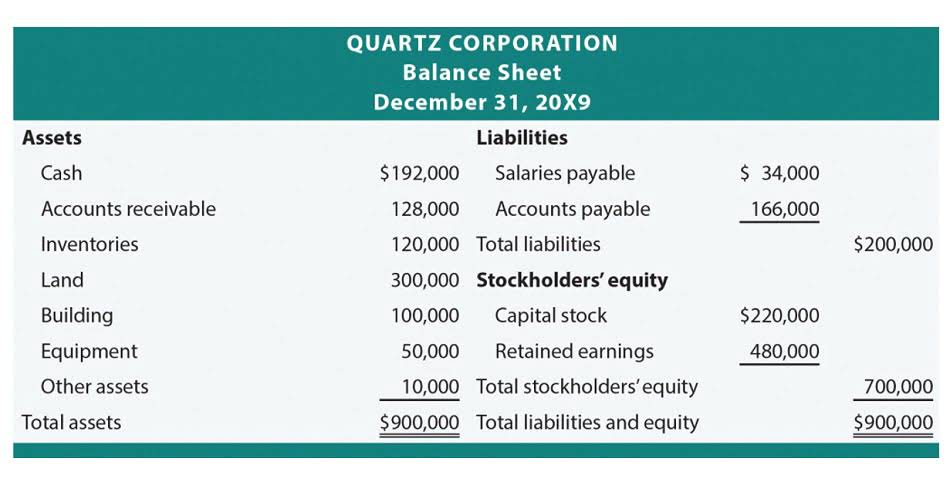
The method can help you predict your expenses and determine when it’s time for a new investment and prepare for tax season. Learn how to calculate straight-line depreciation, when to use it, and what it looks like in the real world. The balance sheet reports the assets, liabilities, and owner’s (stockholders’) equity at a specific point in time, such as December 31. The balance sheet is also referred to as the Statement of Financial Position. The amounts spent to acquire, expand, or improve assets are referred to as capital expenditures.

depreciation salvage value

depreciation salvage value

Accurate estimation of salvage value can aid in forecasting cash flows and anticipating future proceeds, though it’s typically an estimate rather than a precise figure. Utilizing methods such as the percentage of cost, appraisals, or historical comparables helps companies make informed depreciation and financial planning decisions. This method depreciates the machine at its straight-line depreciation percentage times its remaining depreciable amount each year. In earlier years, an asset’s higher value leads to larger depreciation expenses, which decrease annually. You can change from the declining balance method to the straight line method at any time during the useful life of your property without IRS consent. However, if you have a written agreement with the IRS that prohibits a change, you must first get IRS permission.

depreciation salvage value

If you used the percentages above, you cannot claim depreciation for this property after 1995. 3-year property includes automobiles, light-duty trucks (actual unloaded weight less than 13,000 pounds), and tractor units for use depreciation salvage value over-the-road. Any other horses over 12 years old when you placed them in service are also included in the 3-year property class. Here useful life in the form of unit produced is the total unit produced in the year divided by total expected units to be produced. The beginning of period (BoP) book value of the PP&E for Year 1 is linked to our purchase cost cell, i.e.

  • Therefore, it would be helpful if you would include your daytime phone number, including the area code, in your correspondence.
  • However, the depreciation will stop when the asset’s book value is equal to the estimated salvage value.
  • The annual depreciation can be calculated by subtracting the residual value from the PP&E purchase price and dividing that amount by the useful life assumption.
  • Factors such as wear and tear, market conditions, and technological advancements can all impact the value of an asset.
  • Businesses must stay informed about tax laws and regulations to optimize their tax positions and ensure compliance.
  • It’s the value for which the asset can be sold or disposed of after it has served its purpose.

According to IAS 16, the value of equipment or machinery after its useful https://ecoenergy.vn/fifo-vs-lifo-inventory-valuation/ life is often termed the scrap value. Understanding salvage value helps in budgeting and long-term financial planning by ensuring accurate depreciation calculations. Therefore, the DDB depreciation calculation for an asset with a 10-year useful life will have a DDB depreciation rate of 20%.

depreciation salvage value

At the end of three years the truck’s book value will be $40,000 ($70,000 minus $30,000). So using the example above, the cost was 10,000, salvage value 1,000 and useful life 3 years. So, the estimated salvage value of the computer after 5 years is $300, which was the same as the initial estimated salvage value.

Partners Instructions for Schedule K-1 Form 1065 2024 Internal Revenue Service

from 1065

Deductions, governed by the Internal Revenue Code (IRC), include ordinary and necessary business expenses like salaries, rent, and utilities. It is important to distinguish between deductible expenses and capital expenditures, which How to Run Payroll for Restaurants must be capitalized and depreciated over time under the Modified Accelerated Cost Recovery System (MACRS). Complete the top section of the form to provide preliminary information about your partnership. This includes your partnership’s full legal name and address, principal business activity and code, EIN, accounting method, and total assets. If you’re part of a partnership or thinking about starting one, it’s important to understand your tax obligations.

from 1065

Items E and F

If the partnership is a qualified farmer or rancher (as defined in section 170(b)(1)(E)(v)), show each partner’s distributive share of qualified conservation contributions of property used in agriculture or livestock production. Partners will have to separately determine whether they qualify for the 50% or 100% AGI limitation for these contributions. Don’t include the amounts reported on the attached statement using code G in the amount reported on Schedule K-1 for qualified conservation contributions using code C. The section 1202 exclusion applies only to QSB stock held by the partnership for more than 5 years. Corporate partners aren’t eligible for the section 1202 exclusion. Report each partner’s share of section 1202 gain on Schedule K-1.

from 1065

Accounting Periods

from 1065

This form provides a transparent and systematic way for partnerships to report financial performance to the IRS. By understanding the components of partnership income and deductions, company stakeholders can make informed from 1065 decisions based on the accurate representation of the partnership’s financial health. To summarize, Form 1065 is an essential tax document for both domestic and foreign partnerships, as well as multi-member LLCs, that are conducting business or earning income in the United States. By providing detailed financial information about these entities to the IRS, Form 1065 helps ensure that each partner’s share of income and losses is accurately reported for tax purposes and contributes to the proper administration of the tax system. Schedule K-1 captures each partner’s share of income, deductions, and credits. Individual partners use Schedule K-1 to file their individual income tax returns.

How to fill out Schedule L of Form 1065

Answer “Yes” if the partnership is making, or has made (and hasn’t revoked), a section 754 election. For information about the election, see item 4 under Elections Made by the Partnership , earlier. For partnerships that aren’t closely held, attach Form 8697 and a check or money order for the full amount made payable to “United States Treasury.” Enter the partnership’s EIN, daytime phone number, and “Form 8697 Interest” on the check or money order.

from 1065

The partnership will provide a statement that describes the film, television, or live theatrical production generating these expenses. Generally, if the aggregate cost of the production exceeds $15 million, you aren’t entitled to the deduction. The limitation is $20 million for productions in certain areas (see section 181 for details). If you didn’t materially participate in the activity, use Form 8582 to determine the amount that can be reported in Schedule E (Form 1040), line 28, column (g). If you materially participated in the production activity, report the deduction in Schedule E (Form 1040), line 28, column (i). Report loss items that are passive activity amounts to you following the Instructions for Form 8582.

  • You’ll need to report your gross receipts, cost of goods sold (if applicable), total income, total deductions, and net income or loss.
  • For your protection, this form may show only the last four digits of the TIN in items E and H2, as noted under Purpose of Schedule K-1, earlier.
  • Enter on Form 1065, page 1,line 2, the amount from Form 1125-A, line 8.
  • For example, income reported to the partnership from a REMIC, in which the partnership is a residual interest holder, would be reported on an attached statement for line 11.
  • Some of the most popular online tax filing services are H&R Block, TurboTax, and TaxAct.
  • By filing a Form 1065, the IRS can verify that you and your partners have paid their taxes correctly.
  • You’ll be able to find most of the information you’ll need to fill out Schedule K-1 from the Income and Expenses section of IRS Form 1065.

Partners’ Distributive Share Statements

from 1065

You’ll have the option to submit your form(s) online or download a copy for mailing. You’ll need scans of your documents to support your https://nvpcs.com/an-accounting-firm-thats-with-you-all-the-way/ submission. The Taxpayer Bill of Rights describes ten basic rights that all taxpayers have when dealing with the IRS.